If you’ve heard the term fascia stretch therapy and weren’t sure what it actually means, you’re not alone. Most people have no idea what fascia is until something starts hurting — and by then, it’s already causing problems.
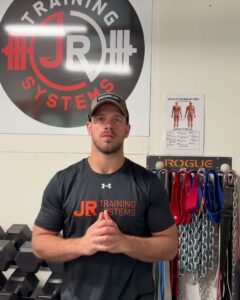
I’m Jake Richardson, owner of JR Training Systems in Kamloops, BC. I’m FST Level 2 certified, and fascia stretch therapy is one of the most effective tools I use with clients. In this post, I’ll explain exactly what it is, what it does, and who it’s best suited for.
Founding 100 · limited spots
Founding 100: lock in $9.99/mo for life.
Join The JRTS Method, Jake’s private training community. Weekly workout drops, nutrition breakdowns, and direct Q&A with Jake. The first 100 founding members lock in $9.99 a month for life. Once the spots fill, the price goes up.
What Is Fascia Stretch Therapy?
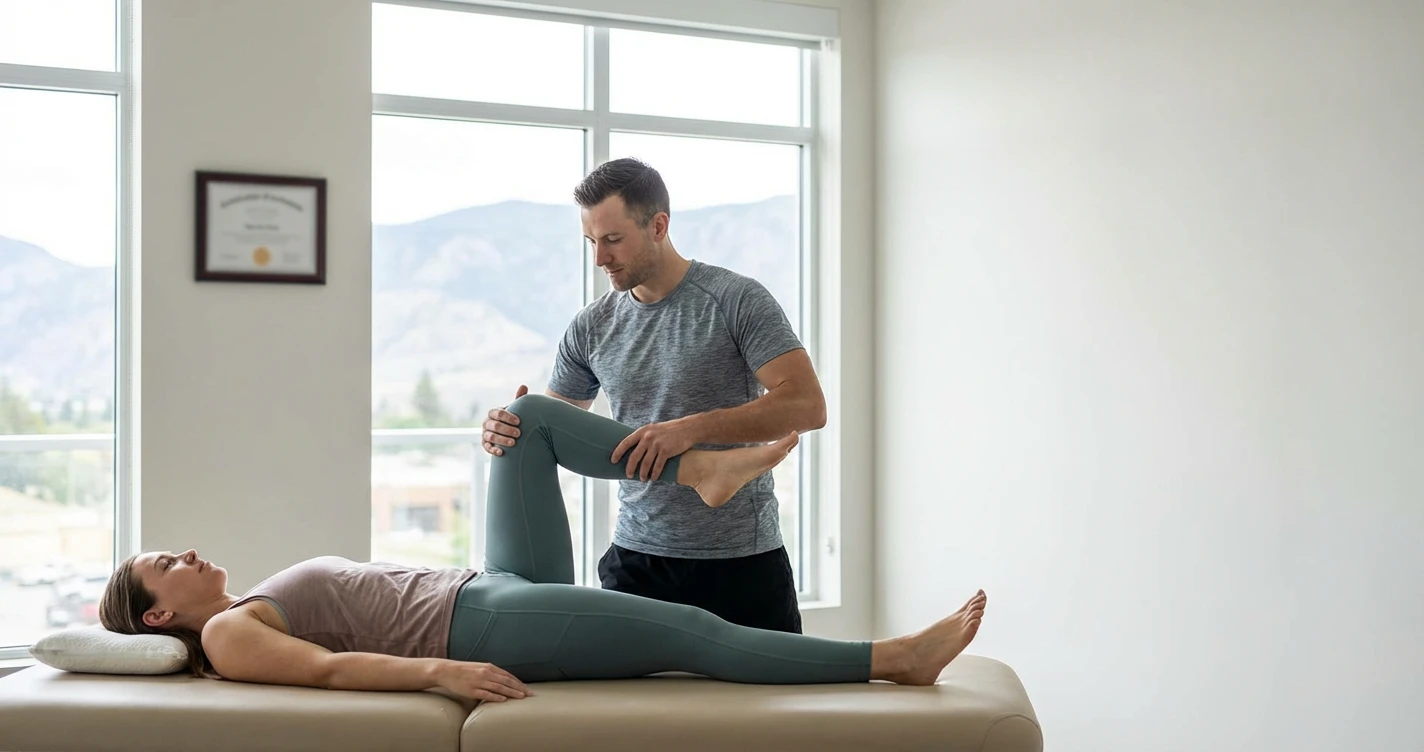
Fascia stretch therapy (FST) is a hands-on stretching method that targets the fascia — the connective tissue that wraps around your muscles, joints, and organs. A certified practitioner guides your body through a series of movements on a treatment table, using gentle traction to decompress your joints and lengthen the tissue in ways you can’t do on your own.
It’s not the same as a regular stretch. It’s not massage either, and I go through how fascia stretch therapy and massage actually compare if you’re deciding between the two. FST works on the entire fascial network, which runs through your body like a continuous web. When that tissue gets tight, thickened, or stuck together, you feel it: stiffness, restricted movement, nagging pain that won’t go away.
FST was developed by Ann and Chris Frederick and is used by elite athletes, physiotherapists, and trainers worldwide. I hold a Level 2 certification, which means I can work with a wide range of bodies — from competitive athletes to people who haven’t been able to touch their toes in years.
What Does Fascial Stretch Therapy Do?
Fascial stretch therapy does several things at once, which is why it produces results that static stretching alone can’t match.
Here’s what happens in a session:
- Decompresses joints — Traction on the spine, hips, and shoulders creates space where there was compression. Clients often describe immediate relief.
- Improves range of motion — We work the full joint capsule, not just the muscle belly. This unlocks movement patterns that have been restricted for months or years.
- Reduces pain and tension — Tight fascia compresses nerves and blood vessels. Once it releases, circulation improves and pain signals quiet down.
- Enhances movement quality — When your body moves without restriction, you use less energy, strain less, and perform better.
- Speeds recovery — FST flushes metabolic waste from tissues and improves fluid exchange. For athletes, this means less soreness and faster turnaround between sessions.
I’ve worked with clients who came in barely able to lift their arms overhead and left with 30 to 40 degrees more range of motion after a single session. That’s not a gimmick — that’s what happens when you address the tissue that’s actually limiting you.
Is Fascia Stretching Good for You?
Yes. For most people, fascia stretch therapy is not only safe — it’s one of the most effective recovery and mobility tools available.
The research on FST is growing. What we know is that the fascial system plays a major role in how your body moves, absorbs force, and recovers from stress. When it’s healthy, you move well. When it’s dehydrated, stiff, or scarred from injury, it creates compensation patterns that lead to overuse injuries and chronic pain.
FST is good for you if:
- You have chronic tightness that foam rolling or stretching hasn’t fixed
- You’re recovering from an injury or surgery
- You sit at a desk most of the day and feel stiff by the time you get home
- You train hard and want to recover faster
- You’re dealing with hip, knee, shoulder, or low-back restrictions
- You want to move better without taking on more aggressive treatment
The only people I’d flag for a conversation before starting are those with very recent injuries, active inflammation, or certain circulatory conditions. But for the vast majority of people I see in Kamloops, FST is something they can start right away.
How Often Should You Do Fascial Stretch Therapy?
For most people starting out, I recommend one session per week for the first three to four weeks. After that, many clients drop to bi-weekly or monthly maintenance once their baseline mobility improves.
Here’s the truth: your fascia didn’t get tight overnight. Consistent, regular sessions are what create lasting change. One session will give you a noticeable improvement. Multiple sessions build on each other and rewire how your body moves.
My guarantee is simple: you’ll notice improvement within three sessions. If you don’t, we need to have a conversation about what’s actually going on and adjust the approach. In ten-plus years of training, that conversation has been rare.
The frequency that’s right for you depends on your goals:
- Athletes in-season: Weekly, to manage load and maintain range of motion
- Post-injury or post-surgery: Weekly to start, then taper as function returns
- General mobility and pain management: Every one to two weeks
- Maintenance: Once a month once you’ve built a solid baseline
Who Is Fascia Stretch Therapy For?
Short answer: almost anyone. I work with clients from age 8 to their 90s at my private facility in Kamloops.
The clients who get the most out of FST in Kamloops tend to fall into a few categories:
Athletes. TRU athletes, hockey players, and anyone training at a competitive level. I played lacrosse for 20 years at the Jr. A, NCAA, and Sr. A levels. I know what a beat-up body feels like, and I know what it takes to keep performing through a long season. FST keeps athletes moving well and recovering faster between sessions.
Active outdoor people. Kamloops has some of the best hiking in BC, and Sun Peaks is right up the road. Skiers, mountain bikers, trail runners — these are people who put their bodies through real terrain and feel it in their hips, knees, and lower backs. FST helps them stay in the game.
Desk workers. Sitting for eight-plus hours a day shortens your hip flexors, rounds your shoulders, and compresses your lumbar spine. Most desk workers I see in Kamloops have never done any tissue work beyond the occasional yoga class. FST can reverse years of postural damage faster than anything else I’ve used. You can read more about this on my mobility training page.
People in chronic pain. Back pain, hip pain, shoulder issues that won’t quit. If you’ve been told everything is “fine” but you still don’t feel fine, tight fascia is often what’s been missed.
Post-rehab clients. After physiotherapy ends, there’s often a gap between “cleared to exercise” and “actually moving well.” FST bridges that gap.
Why Kamloops Has Basically No Options for FST
This is something I noticed when I started offering FST. There isn’t another personal trainer in Kamloops who is FST certified, let alone at Level 2.
The big-box gyms — Anytime Fitness, GoodLife — don’t offer this. You’d need to drive to Vancouver or find a specialty physio clinic to get access to a qualified FST practitioner. And those appointments book up fast.
At my private facility on Ayr Place, FST sessions are one-on-one. There’s no front desk, no wait, no one watching. Just focused work in a quiet setting. That’s by design.
Kamloops summers hit 35 to 40 degrees Celsius, and winters get well below freezing. Indoor recovery work isn’t optional if you want to stay active year-round. FST fits naturally into an off-season recovery plan or a year-round maintenance routine for people who don’t want to slow down.
If you’re looking for fascia stretch therapy near you in Kamloops, I’m the only certified option in the city.
FAQ: Fascia Stretch Therapy Questions
What’s the difference between FST and regular stretching?
Regular stretching targets individual muscles. FST targets the entire fascial system, including the joint capsule, connective tissue, and surrounding structures. The results are deeper, last longer, and happen faster.
Does fascia stretch therapy hurt?
No. FST should feel like a release, not pain. I use gentle traction and guide your body into positions it can handle. If something is uncomfortable, we adjust. The goal is to calm the nervous system, not trigger it.
Can FST help with back pain?
Yes. A large portion of my Kamloops clients come in specifically for back pain. FST decompresses the spine, releases the hip flexors and thoracic tissue, and addresses the patterns that are keeping the pain in place. See my back pain and injury prevention work for more detail.
Is FST covered by extended health benefits?
In most cases, no. FST provided by a personal trainer is not typically covered. If your coverage requires a registered physiotherapist or RMT, that’s a different designation. I’d recommend checking your plan. Some clients split their recovery work between FST with me and RMT sessions covered by benefits. I explain how coverage works and when to book a massage instead in fascia stretch therapy vs massage in Kamloops.
How long is a session?
Sessions are typically 60 minutes. For new clients, I’ll spend some of that time on assessment so I understand where your restrictions are and what we’re working toward.
Ready to Try Fascia Stretch Therapy in Kamloops?
My private facility is located at 2631 Ayr Pl, Kamloops, BC. Sessions are by appointment only. No crowds, no waiting.
I work with clients at every level, and I’ll tell you straight away whether FST is the right fit for what you’re dealing with. I also have a referral network of other Kamloops health professionals if your situation calls for a different approach first. You can check that here.
If you’ve been dealing with tightness, pain, or restricted movement and want to know if fascia stretch therapy can help, the next step is easy.
You’ll notice a difference within three sessions. That’s not a promise I make lightly — it’s one I’ve backed up with 151 five-star reviews and over a decade of doing this work in Kamloops.
Jake Richardson is the owner and sole trainer at JR Training Systems in Kamloops, BC. He holds an FST Level 2 certification, the NSCA CPPS designation, and a Precision Nutrition Level 1 certification. He played lacrosse competitively for 20 years at the Jr. A, NCAA, and Sr. A levels and has been working with Kamloops clients since 2015.