You have probably bought one before. A twelve-week plan, a PDF, an app with a login you have forgotten. It looked great in week one. By week three the workouts stopped happening, and the guilt about not doing them lasted longer than the program did.
That is the normal outcome, not a personal failing. I am Jake Richardson. I have been coaching since 2015, in person in Kamloops and remotely across Canada and the US, and I have watched a lot of people arrive at my door carrying the wreckage of three or four abandoned online programs. The pattern is consistent enough that it is worth naming. Here is why online personal training programs get abandoned, what a good one does differently, and how to tell them apart before you pay for another one.
Why online training programs get abandoned
It is rarely motivation. People who buy a program are motivated by definition. They quit for four reasons, and all four are design problems.
- The plan was not built for your body. Generic programs assume a body with no history. If you have a cranky shoulder, a back that flares up, or a knee from an old injury, the third session hurts, and the sensible reaction to a program that hurts is to stop doing it.
- Nobody is watching. An app hands you a video and a rep count. You copy what you see, and you have no idea whether what you are doing looks anything like the video. Small technique errors compound into pain or into no results, and either one ends the program.
- Nothing changes when your life does. You get sick, you travel, you have a brutal week at work. A static plan does not care. You miss four days, fall behind the schedule, and the program becomes a record of your failure instead of a tool.
- You are doing it alone. This is the big one. There is no one to ask, no one who notices you disappeared, no one at the same stage to compare notes with. Solo effort with no feedback loop is the hardest possible version of building a habit.
Look at that list again. Not one of those problems is fixed by better exercises. They are fixed by a coach and a group of people, which is exactly what most online programs strip out to keep the price low.
What separates a coached program from a workout app
Both cost money every month. They are not the same product.
A workout app sells you delivery. It tells you what to do today. That is genuinely useful if you already know how to lift, already know how to modify around a sore shoulder, and only need someone to hold the calendar. Most people who buy them do not fit that description.
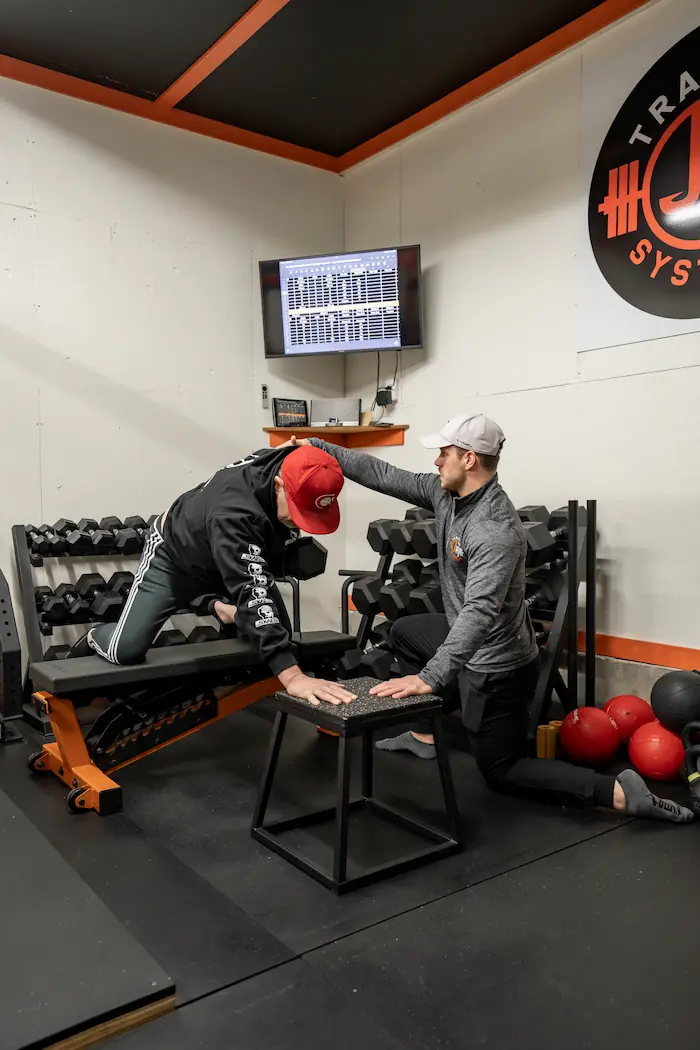
A coached program sells you correction. Someone qualified looks at what you are actually doing and tells you what to change. The workouts matter less than you would think. Almost any sane program will build strength if you do it consistently for six months. What decides whether you get there is whether someone catches the problem in week two instead of week twelve.
Here is the honest test. Ask any online personal training program one question: if I send a video of my squat, who watches it, and how fast do they reply? If the answer is a chatbot, an automated form check, or a coach with four hundred clients, you are buying delivery. Price it accordingly.
The four things that make an online program stick
After a decade of this, these are the pieces I would insist on before paying for anything remote.
- A track that matches your starting point. Not a beginner, intermediate, advanced ladder based on how long you have trained. A real fork based on what you are dealing with, because someone training around chronic back pain needs a different first eight weeks than someone chasing a heavier squat.
- Phases, not an endless feed. Training in blocks of about six weeks gives you a start, a finish, and a reason to keep going. Programs that just publish a new workout every day have no arc, and something with no finish line is easy to walk away from.
- A named human who answers. One coach you can identify, who replies to your question in a day, not a support inbox. When your back is sore on a Tuesday you need an answer that Tuesday, or you skip the session and then the week.
- Other people at the same stage. This is the part people underrate before they experience it. Seeing someone six weeks ahead of you post the exact thing you are struggling with does more for consistency than any push notification. It also makes it much harder to quietly disappear.
Notice that only one of those four is about the workouts.
How The JRTS Method is built
I built my own remote program around those four things, because I got tired of watching people fail out of programs that were never designed to keep them.
It runs as a private community rather than an app. Members get three training tracks and pick the one that fits: Train Without Pain for people working around an old injury or ongoing pain, Foundation Strength for people getting back into it or starting properly for the first time, and Performance Builder for people who already train and want to progress on purpose. All three are included. There is no upsell to a real version.
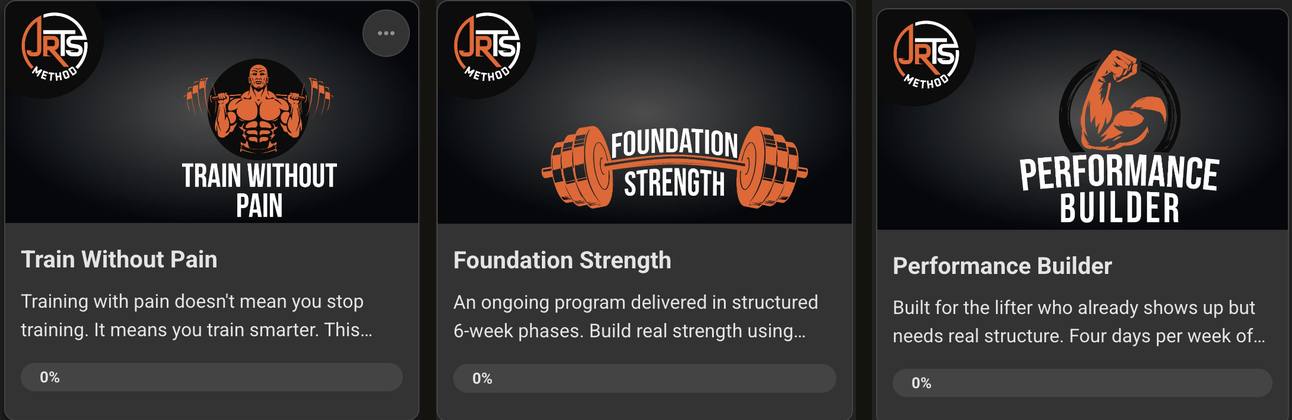
Each track runs in six-week phases, so you always know where you are and what the current block is meant to do. Most people train two to three days a week at 30 to 45 minutes, which is what busy adults actually complete. Performance Builder steps up to four days for people who already train consistently and want more structure.
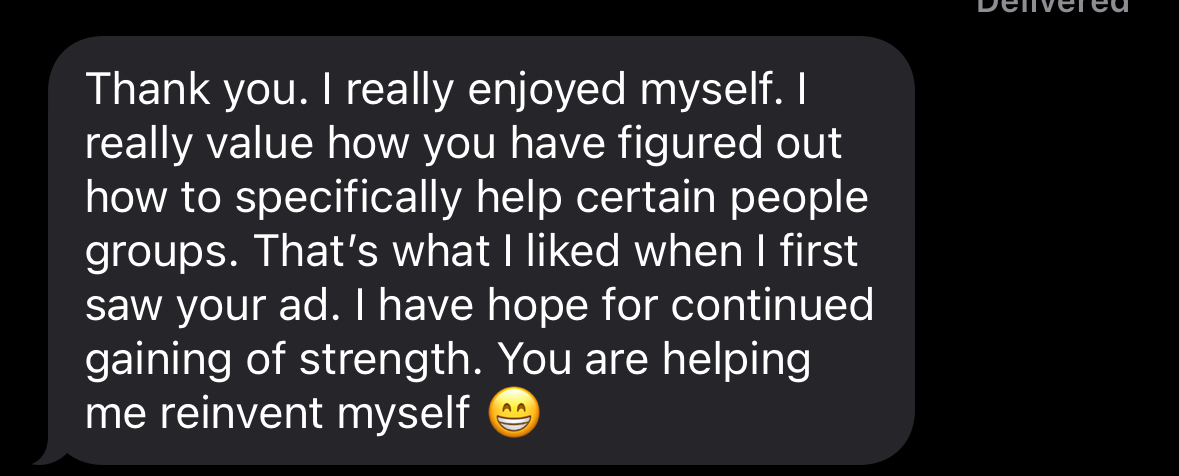
The part that matters most is the last part. I am in there. You post a video of your set, I watch it and tell you what to fix. You ask why your hip pinches at the bottom of a squat, you get an answer from the same coach who does this in person in a studio every week. That is the same job I do face to face, delivered through a screen.
Founding members join at $9.99 a month and keep that rate for life, capped at the first 100 members. After that the price goes up, and founding members stay where they are. You can see the community and join here, or read the full breakdown on the remote personal training page.
Who should train online, and who should not
I would rather you skip this than buy something that will not work for you.
Online training fits well if you can train consistently at a set time, you have access to basic equipment or a gym, you can film yourself now and then, and your main obstacle is not knowing what to do. That describes most working adults.
Train in person instead if you are early in a rehab process that a physiotherapist is still managing, if you have never touched a barbell and the idea of one makes you nervous enough to avoid it, or if you know from experience that you only show up when someone is expecting you in a room. There is no shame in that last one. It is just information about how you work. If you are in Kamloops, that is what private in-person training is for.
Plenty of people do both. Train remotely most weeks, come in for a session when something needs hands-on attention.
What an online personal training program should cost
For reference: app-based plans with no human attached generally run $20 to $60 a month. One-on-one online coaching with a dedicated coach usually runs $100 to $250 a month, and it is worth it if you need that level of individual attention.
A coached community sits in between on service and well below both on price, because one coach can genuinely serve a group when the group also helps each other. That is the whole reason the model works. What you should never do is pay app prices and expect coaching, or pay coaching prices for a program that turns out to be a content library with a logo on it.
Frequently asked questions
Do online personal training programs actually work?
Yes, when they include real coaching feedback. The programming itself is rarely the deciding factor. What decides results is whether someone qualified corrects your technique, adjusts the plan when your life or your body changes, and notices when you go quiet. Programs without those three things have poor completion rates no matter how good the workouts look.
How is an online training community different from a workout app?
An app delivers workouts. A community adds a coach who answers your questions and other members training the same plan alongside you. The workouts are similar. The accountability and the correction are not, and those are what determine whether you are still training in month six.
Can you get real strength results training at home?
Yes. Progressive overload works with dumbbells, bands, and bodyweight, especially in the first year or two. What matters is that the plan gets harder over time in a structured way and that someone is checking your form. A good remote coach programs around whatever equipment you actually have.
What if I have an injury or ongoing pain?
Then avoid any generic program, which is the one situation where they cause real harm. You need a track designed to train around the issue and a coach who will adjust it. That is exactly why the Train Without Pain track exists. If you are currently under the care of a physiotherapist or doctor, follow their guidance first and bring me in alongside it.
How much time do I need each week?
Two to three sessions of 30 to 45 minutes. That is enough to build real strength if you keep it up. More than that is optional, and for most busy adults, planning for more is how the plan dies.
If you have quit a few online programs already, the programs were the problem, not you. Come see what it is like with a coach who answers. Join The JRTS Method while the founding rate is open, or book a session if you would rather start one on one.