You foam roll. You stretch before you train. And your hips still feel locked up by Wednesday. Sound familiar?
That stiffness often is not your muscles. It is your fascia, the connective tissue that wraps every muscle and joint in your body. Fascia stretch therapy targets that tissue directly, and it can reach tension that regular stretching keeps missing. I am Jake Richardson, a personal trainer in Kamloops and one of the few FST Level 2 practitioners in the city. Here is what this therapy actually does, and who gets the most out of it.
What does fascia stretch therapy actually do?
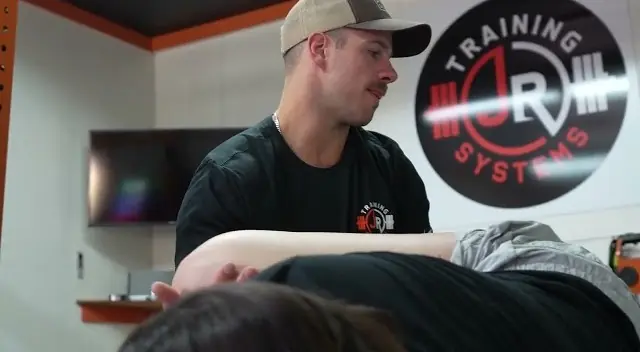
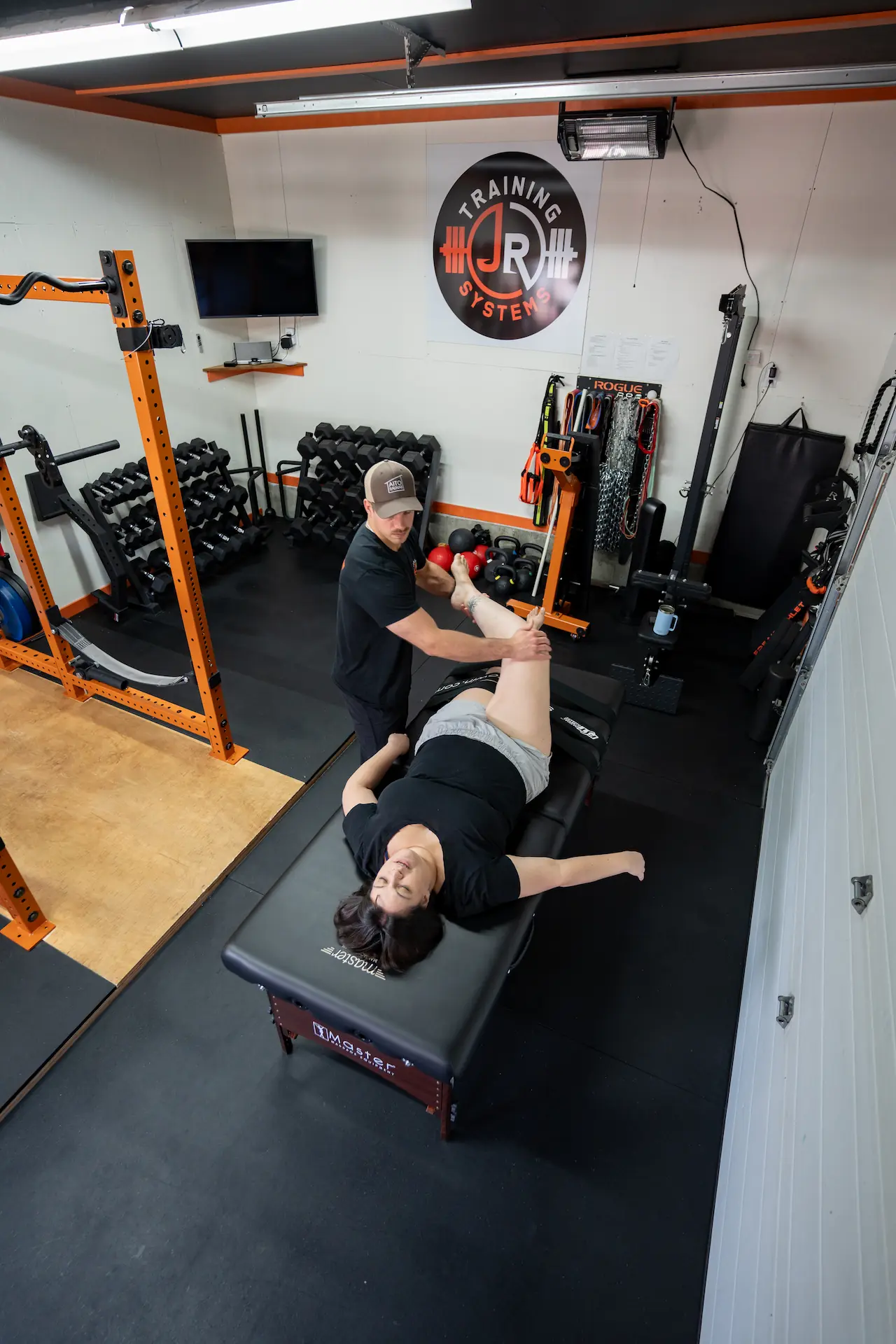
Fascia stretch therapy is a hands-on, assisted stretching method that opens up the fascia and the joints it surrounds. You lie on a table, gently strapped in, while a trained practitioner moves your limbs through slow, traction-based stretches you cannot do on your own.
The point is to reach the connective tissue, not just the muscle belly. Fascia responds to slow, sustained pressure held for one to three minutes, not the quick 20-second stretch most people do. By adding gentle traction to the joint, FST creates space and glide between tissue layers that get stuck together over time.
The result is more room to move. Most people feel looser and taller walking off the table than they did getting on it.
What are the main benefits of fascia stretch therapy?
The benefits of fascial stretch therapy come down to how you move and how you feel. It works on the whole chain, not one tight spot.
Here is what FST is known for:
- More mobility and flexibility. You gain range of motion in the hips, shoulders, and spine, the areas that stiffen up first.
- Less pain and tension. It eases myofascial tightness, especially in the low back and hips, where sitting does its damage.
- Better recovery. Improved circulation helps you bounce back faster between hard training days.
- Improved posture. Releasing full-body tension lets you stand and move in better alignment.
- A calmer nervous system. The slow, steady pace shifts your body into a relaxed state, which is why people often leave a session feeling settled, not wrung out.
One honest note. FST is not a magic fix that permanently erases old injuries in one visit. It is a tool that works best used regularly, alongside strength work that keeps the new range of motion.
Is fascia stretch therapy just fancy stretching?
No. The difference is traction and depth. Regular stretching pulls on a muscle. Fascia stretch therapy uses gentle joint traction and multi-directional movement to reach the connective tissue and the joint capsule, which you cannot access by stretching on your own.
Foam rolling and static stretching still have a place. But foam rolling presses tissue against the floor, and a solo stretch only pulls in one line. FST moves your body through angles you would never hit alone, with a practitioner reading how your tissue responds and adjusting in real time.
Think of stretching as maintenance you do yourself, and FST as the deeper reset you cannot reach on your own. Massage is a different job again, and I lay out how fascia stretch therapy and massage compare if you are trying to pick one.
Who benefits most from fascia stretch therapy?
Almost anyone can use FST, but a few groups feel the difference fastest. This is where it earns its keep.
- Desk workers with stiff hips and low backs. If you sit all day, your hip flexors and low back take the hit. FST opens those areas so you stop feeling glued to your chair. If back pain is your main issue, pair it with back pain management training.
- Athletes and hockey players. More hip and shoulder range means better power and fewer tweaks. It fits neatly into hockey performance training for players who need to move well and recover between games.
- Older adults. Keeping joints mobile is how you stay independent and off the floor. FST is gentle, which makes it a good match for senior fitness training.
- Lifters who stalled out. If your squat depth or overhead position is stuck, tight fascia is often the reason. Opening it up can unstick a plateau that no amount of extra sets was fixing.
The people who benefit least? Anyone hoping to skip the work. FST opens the door. Strength training is what keeps it open.
How often should you do fascial stretch therapy?
It depends on your goal. Active people and athletes chasing performance and recovery do well with two to three sessions per week. If you are managing chronic pain or ongoing stiffness, weekly or biweekly sessions tend to hold the gains better over time.
Most people start with a short block of regular sessions to make real change, then drop to a maintenance rhythm once things feel better. A single session feels good. A consistent routine is what actually shifts how your body moves.
Fascia stretch therapy in Kamloops
Here is where being a trainer matters. Most places that offer FST are physio or massage clinics, where the stretch is the whole visit. In my Kamloops studio, FST is part of a bigger plan. That difference, including which one your benefits will actually cover, is worth understanding before you book: fascia stretch therapy vs massage in Kamloops.
I use it to open up the range of motion you need, then I load that new range with strength work so it sticks. Stretch without strength fades fast. That combination is the difference between feeling good for a day and moving better for good.
I am FST Level 2 certified, which is still uncommon in Kamloops, and I have spent over a decade helping people here move and train without pain. You can read more on the fascia stretch therapy page or the deeper explainer on what fascia stretch therapy is.
Want the workouts and mobility drills that keep your new range of motion? Members of my private training community, The JRTS Method, get weekly drops and can ask me anything. Founding members lock in a low rate for life, and you can join the community here.
Frequently asked questions
Does fascia stretch therapy work?
Yes, for mobility, tension relief, and recovery. It is not a cure for every ache, but people reliably leave a session moving better, and regular sessions build on that. It works best combined with strength training that reinforces the new range.
How can you tell if your fascia is tight?
Common signs are stiffness that does not ease with a quick stretch, a feeling of being pulled or restricted when you reach or twist, nagging tension in the hips or low back, and joints that feel stuck rather than sore. If foam rolling gives you an hour of relief at best, tight fascia is a likely culprit.
Is fascia stretch therapy covered by insurance?
It depends on who provides it and your plan. When FST is delivered by a registered practitioner like a physiotherapist, it may fall under those benefits. Sessions with a trainer or kinesiologist usually are not billed the same way, so check your plan before you book.
What does a fascial stretch therapist do?
They assess how you move, then guide your body through assisted, traction-based stretches on a table to release fascia and open the joints. A good one also tells you what to do between sessions so the results last.
Stiff hips and a tight back are not just something you live with. If you want to move better and train without fighting your own body, book a session and we will build a plan that fits you.